- Legislative Impacts
- Number of Individual Income Tax Returns Files
- DMV and TAX Website Redesign
- Number of Vehicle Renewals
- DMV Fee Estimator
- Annual Call Statistics
- Average Satisfaction
- Property Tax Education Statistics
- DMV Wait Time Display
- Leveraging AI for Agent Efficiency
- Making Tax Account Applications Online Only
- Increasing Feedback Channels
- Outreach Trainings Attendance
- Number of MVED Cases
- Real Property Transfer Survey Now Available Electronically
- Call Back Feature Added
Annual Statistics - Calendar Year 2025
2026 Legislative Impacts

During the 2026 legislative session, we reviewed 951 bills. Out of the 200 that passed, 97 directly affect our agency:
-
54 bills create extra workload for our team, though we can't assign an exact cost to that work.
-
43 bills come with specific, documented costs to our budget.
DMV Wait Time Display

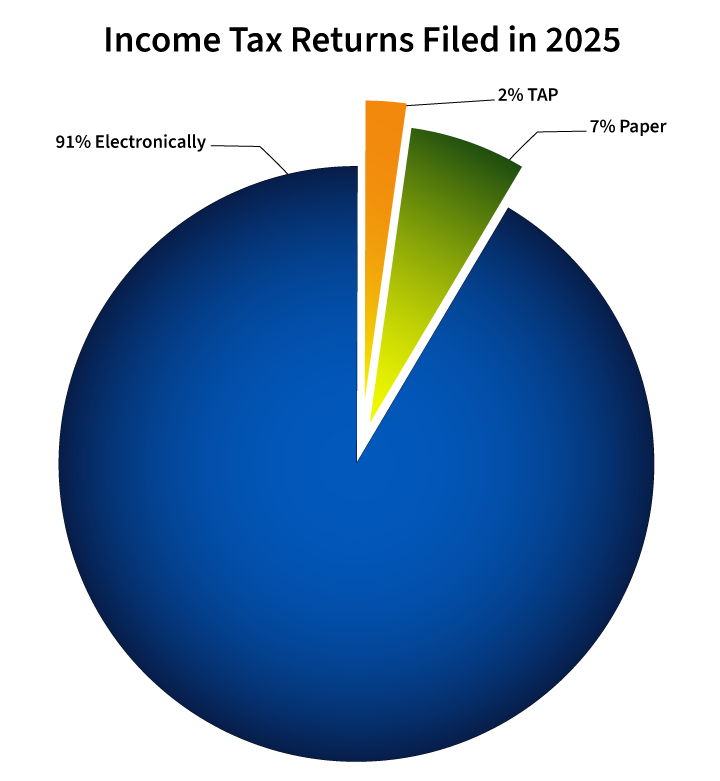
Number of Individual Income Tax Returns Filed
2024
- Electronically - 1,372,165
- Online Filing - Taxpayer Access Point (TAP) - 31,453
- Paper - 82,799
- Total: 1,486,417
2025
- Electronically - 1,629,587
- Online Filing - Taxpayer Access Point (TAP) - 33,112
- Paper - 123,456
- Total - 1,786,155
DMV and TAX Website Redesign
Number of Vehicle Renewals

2023
- On the Spot (OTS Stations) - 1,083,351
- Renewal Express (Online) - 1,067,890
- In Person - 570,628
- Mail In - 17,260
- Automatic - 6,072
- Total - 2,745,201
2024
- On the Spot - 1,124,545
- Renewal Express - 1,087,837
- In Person - 600,861
- Mail In - 17,773
- Automatic - 6,834
- Total - 2,837,850
2025
- On the Spot - 1,138,281
- Renewal Express - 1,146,432
- In Person - 588,162
- Mail In - 18,742
- Automatic - 3,110
- Total - 2,984,727
DMV Fee Estimator

Have you ever called the Utah State Tax Commission or the Motor Vehicle Division only to hear the message, “We are experiencing a high number of calls; please call back later?” This is unfortunately a common experience for taxpayers, especially during the summer. We asked ourselves, how can we reduce the number of phone calls that are unable to wait in our queue and receive this message? How could we reduce wait times and assist more taxpayers?
First we had to understand why people were calling us. We reviewed call data and determined the primary reason taxpayers were calling was to inquire about vehicle registration cost estimates. After reviewing our website's existing information, we decided the best solution was to create a Fee Estimator. The estimator prompts users to answer a series of questions and then provides the estimated registration costs.
We launched the Fee Estimator in July 2024. Following its launch, inquiries about registration price estimates were no longer the lead topic. In three months it dropped to being the eighth most common topic. As we continue to advertise the Fee Estimator, the topic continues to drop. Currently, it no longer even ranks in the top ten. Reducing calls related to registration price estimates has allowed us to answer more calls that previously could not enter our queues.
For a full article on this project, please see “Taking the Guesswork Out of Car Registration”
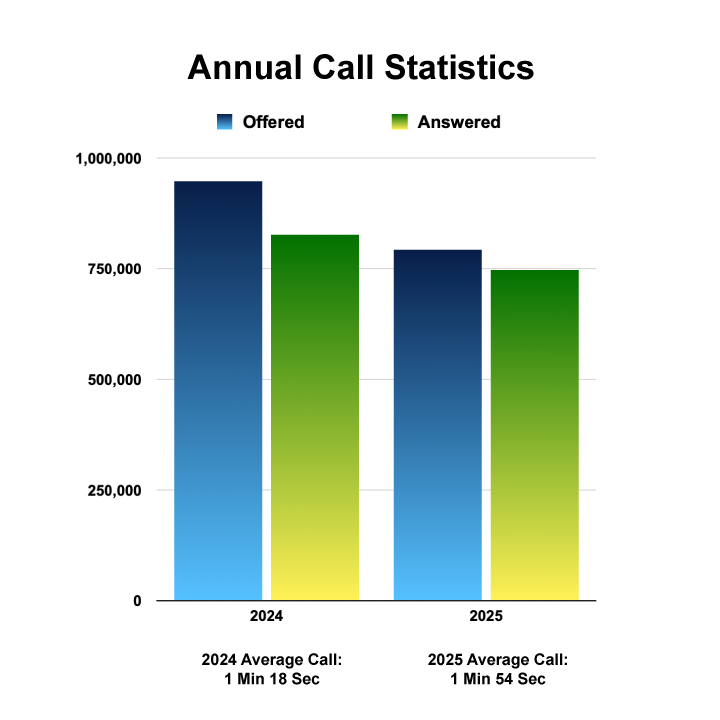
Annual Call Statistics
2024
- Total Calls Received 948,402,
- Total Calls Answered 826,146
- Percent Answered ??
- Average wait time 1 minute 18 seconds
2025
- Total Calls Received 793,274
- Total Calls Answered 746,968
- Percent Answered ??
- Average wait time 1 minute 54 seconds
Average satisfaction between After Call Texts and In-Person Survey Responses

- 2024 - 4.35 out of 5 stars
- 2025 - 4.5 out of 5 stars
Property Tax Education Statistics

In 2024
- Number of classes taught for Division of Real Estate appraisal licensing, certification, and State designations- 55
- Total Number of students attending- 1,089
- Students completing Division of Real Estate licensing, certifications or State Designations - 63
In 2025
- Number of classes taught for Division of Real Estate appraisal licensing, certification, and State designations- 55
- Total Number of students attending- 1,464
- Students completing Division of Real Estate licensing, certifications or State Designations - 107
Leveraging AI for Agent Efficiency

Taxpayers have tax questions, and our agents are expected to answer them accurately. We provide them with all available resources, including internal procedures, job aids, our websites, and even their coworkers. While valuable, this information is dispersed across various sources. Previously, there was no single centralized location for our agents to quickly find the answers they needed... until now. We recently developed a secure, internal-use AI Research Tool for our agents to access, allowing them to have all resources at their fingertips to efficiently answer tax questions.
For example, if a taxpayer calls inquiring about the sales tax rate for a vehicle in Salt Lake City. Our agent would typically need to navigate our website and look up sales tax rates for all localities across the state. They would then narrow their search down to Salt Lake City, but would also need to subtract any impacted community tax in order to determine the correct rate for the taxpayer. However, with the AI Research Tool they can simply input “sales tax rate for Salt Lake City on vehicle sales.” The AI Research Tool will return the rate along with the resources used to generate the answer. This enables our agent to answer the taxpayer's question more quickly and efficiently, as well as with the confidence needed to ensure the answer is correct.
Making Tax Account Applications Online Only
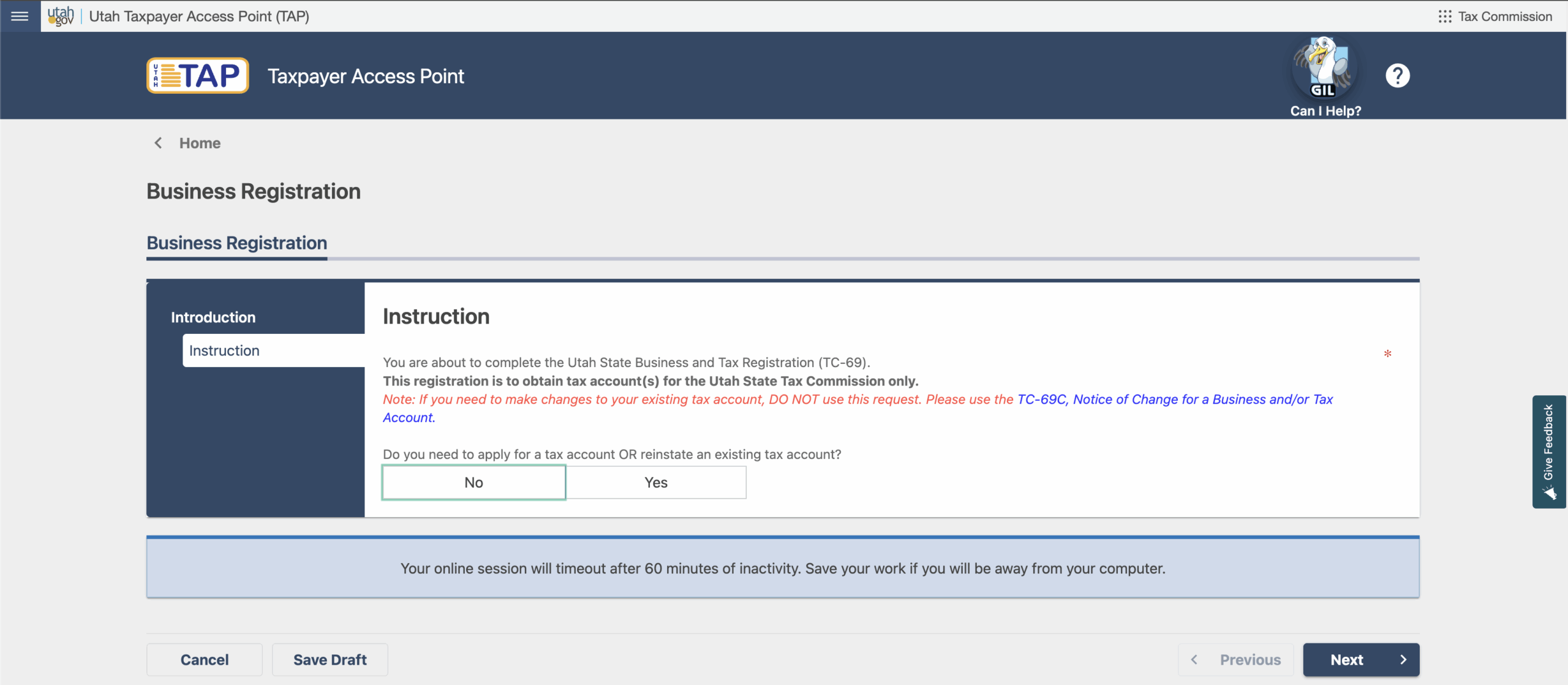
How does one obtain a tax account and why is one needed? In order to collect or remit taxes you must have a tax account. In the past, the process was not straightforward. Applicants had to complete a paper form, TC-69, which was approximately 10 pages long. Although not all pages were always required, it was difficult for applicants to determine which were necessary. We revised the form to condense it to three mandatory pages with optional schedules, aiming to clarify which pages taxpayers needed based on their specific situations. Subsequently, we created an online application option for tax accounts called TAP-Business Registration.
While we saw great success with the online software, a significant number of paper applications continued to arrive. Paper applications took considerably longer to process than the online option due to required manual data entry by our staff once the application was received, human error upon that manual entry (typos), and the discovery of missing information which requires us to contact the customer for clarification. It was taking over three weeks for an application to be processed. We consistently received feedback that this same process, in other states, took significantly less time (often a week or a few days). We collaborated with our staff to develop options for improving processing time. We repeatedly encountered the issue of paper applications simply taking too long to process.
In June 2024, we mandated that all business tax account registration applications be submitted electronically. We provided iPads in our state tax offices for taxpayers to use when applying for their tax accounts. Since implementing this change, our processing time has been reduced to 1-3 days. We are receiving fewer phone calls from taxpayers inquiring about application status and less feedback comparing us to other states. We have also observed a decrease in errors.
Increasing Feedback Channels

Training Attendance Soars!

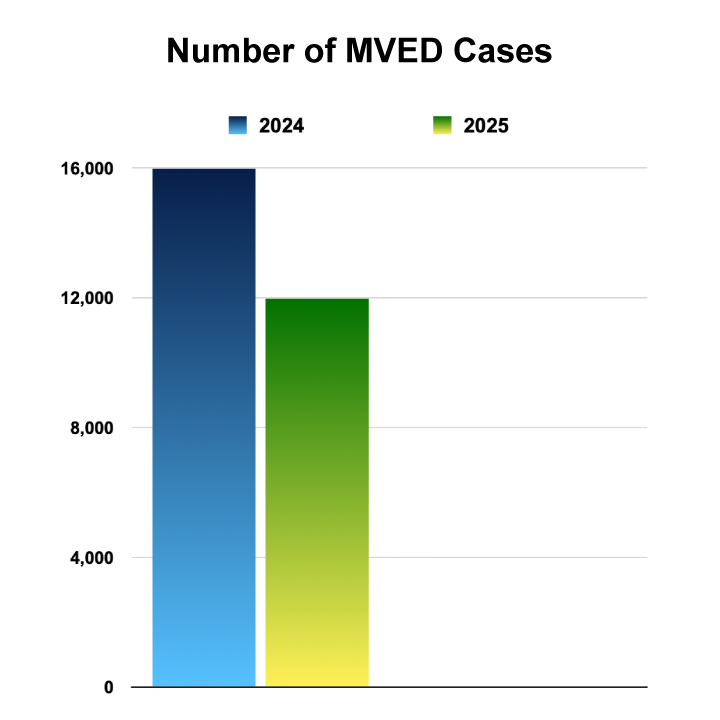
Number of MVED Cases
- 2024 – 15,974
- 2025 – 11,976
Real Property Transfer Survey Now Available Electronically

Call Back Feature Added

Nobody likes sitting on hold. That’s why we added a callback feature, to our contact centers experiencing longer hold times, during our November 2025 phone system upgrade. Instead of waiting on the line during peak times, you can request a call back without losing your spot. As of August 2026 it has been used over 15,000 times saving customers roughly 3,000 hours.